From the first pipe to your favorite glass, make every part of your water setup work smarter.
A thoughtful combination of whole-home treatment, reverse osmosis, and efficient water heating can address different household needs. Start with your water results, then choose the solutions that fit.
For the people. For the plumbing. For everyday life.
TEST FIRST. MATCH THE SYSTEM. MAINTAIN IT.
Whole-home coverageFocused drinking-water treatmentEfficient hot water
01 / THREE ROLES. ONE THOUGHTFUL PLAN.
Get to know your options.
These systems do different jobs. Combining them makes sense when each solves a need you actually have.
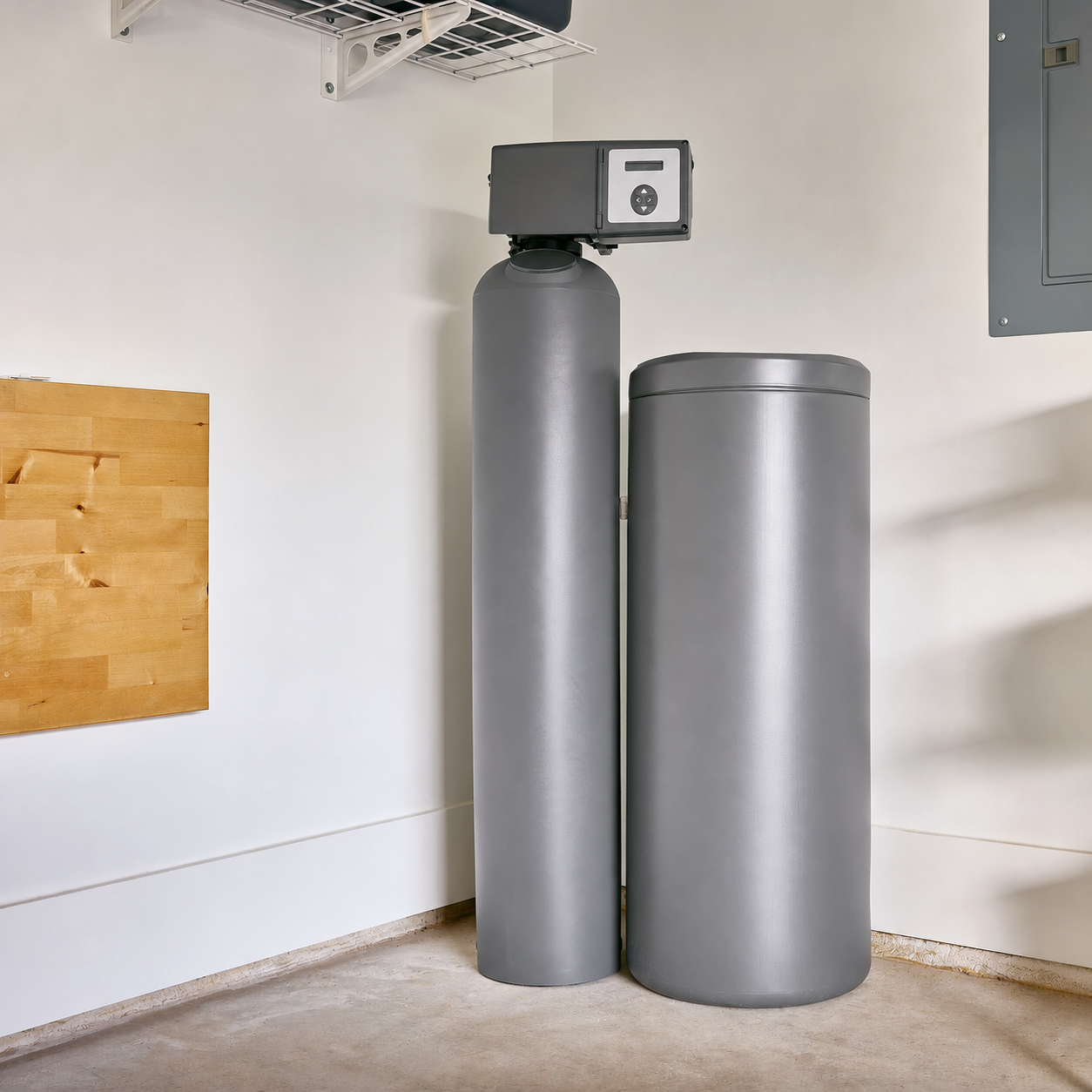
Water softener example: resin tank + salt brine tank. Branding removed from supplied photo.
01 / AT THE POINT OF ENTRY
Whole-home filtration.
Installed on the incoming water line, a whole-home system treats water before it reaches the taps it serves. Sediment filters capture particles; carbon media can reduce chlorine taste and odor. Other media target particular concerns.
For your family: a model certified for a relevant contaminant can reduce exposure to that contaminant throughout the home.
For your plumbing: sediment filtration can help keep particles out of fixtures and equipment. Hardness needs its own treatment.
For efficiency: size the system for peak household flow and compare filter capacity, pressure drop, and replacement costs.
A carbon filter is not a water softener. Removing chlorine also removes a protective disinfectant residual; proper maintenance matters. [1, 2]
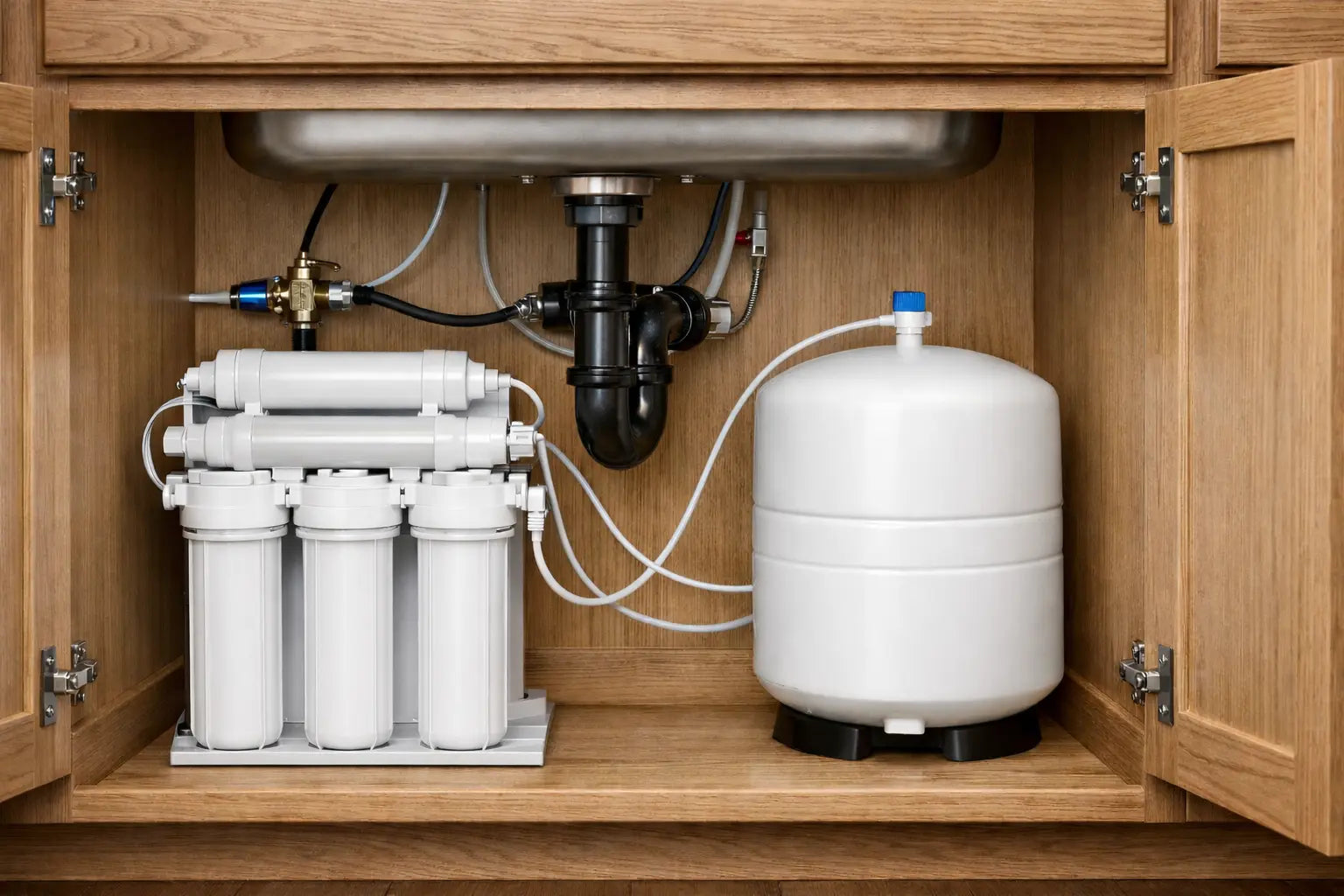
RO uses pressure and a membrane to separate treated water from a reject stream. It commonly serves a dedicated kitchen faucet for drinking and cooking.
For your family: choose a model with verified reduction claims for the contaminants identified in your water, such as lead, arsenic, or PFAS.
For your routine: compare usable output, tank space, filter access, and ongoing replacement costs.
For efficiency: look for the WaterSense label and compare rated recovery and reject-water use.
An under-sink RO system treats that outlet. It does not protect the rest of your pipes, shower, or water heater. Lower dissolved solids alone do not prove water is safe. [1, 3, 4]
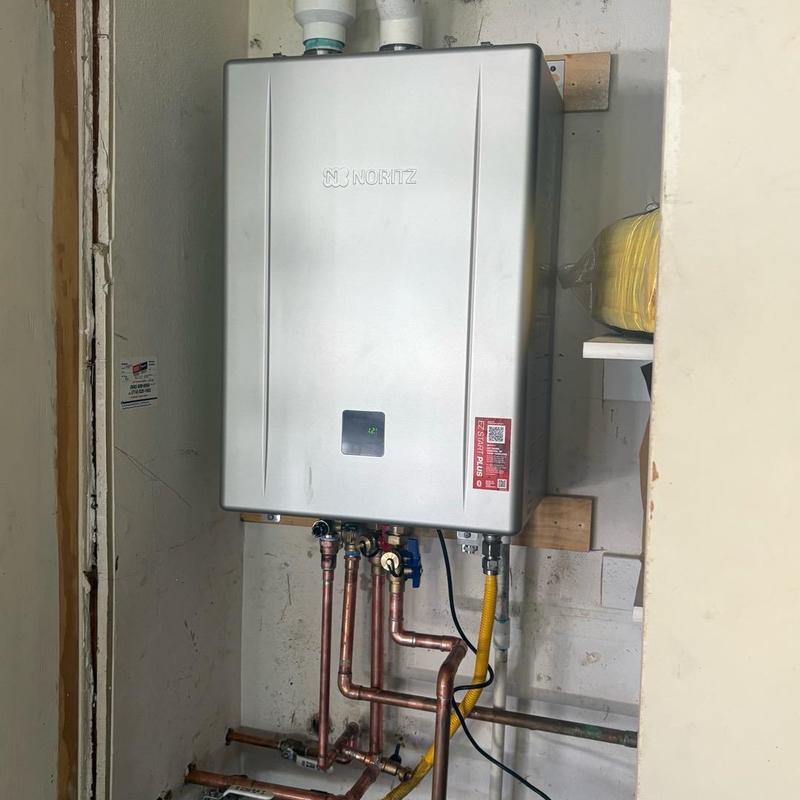
A tankless heater heats water as it flows, avoiding the need to keep a large tank hot. It can improve water-heating efficiency compared with conventional storage equipment, depending on the model and usage.
For your household: properly sized equipment supports reliable hot water for bathing and cleaning. Available flow is limited by demand and temperature rise.
For the equipment: address hard water and follow the manufacturer’s descaling schedule to help preserve heat-exchanger performance.
For installation: have a qualified professional check fuel or electrical capacity, venting, sizing, and temperature controls.
A water heater does not filter contaminants, soften water, or prevent pipe corrosion. Its role is efficient heating; water treatment supports the quality of the water entering it. [5, 6]
Photos illustrate system types and are not a promise of a particular brand, configuration, or installation.
02 / CARE FOR WHAT’S BEHIND THE WALLS
Protect the flow. Care for the home.
Plumbing protection starts with identifying what is causing the problem.
PARTICLES
Catch sediment.
A correctly sized sediment filter helps intercept grit before it reaches downstream fixtures. Replace clogged cartridges to maintain flow.
HARDNESS
Manage scale.
A salt-based ion-exchange softener removes calcium and magnesium. This can reduce new hardness scale in fixtures and water-heating equipment. Ordinary carbon filtration does not do this.
WATER CHEMISTRY
Investigate corrosion.
Low pH, corrosive water, and deteriorating pipes need an appropriate diagnosis. Filtration cannot repair damaged plumbing or guarantee corrosion prevention.
UPKEEP
Keep it working.
Follow filter, membrane, and heater service schedules. Whole-home treatment and RO are not substitutes for safe plumbing or proper disinfection when needed.
Whole-home filtration, appropriate hardness treatment, and point-of-use RO can complement one another. Not every home needs every system. [1, 2, 6]
03 / SIDE BY SIDE
Different methods. Different strengths.
Choose by the concern, the installation point, and the exact model’s verified performance—not by the number of stages on the box.
Filtration & treatment: what each method does
System
Best suited to
Where it works
Trade-offs & care
Sediment filter
Sand, silt, and other particles
Whole home or before other treatment
Does not remove dissolved salts; cartridges can clog and restrict flow.
Activated carbon
Chlorine taste and odor; other contaminants only with specific verified claims
Pitcher, faucet, under sink, or whole home
Usually keeps dissolved minerals; replace media on schedule. Not a general germ barrier.
Ultrafiltration (UF)
Particles and certain microbes, depending on pore size and validation
Often under sink; other configurations available
Generally retains dissolved salts; does not reliably address dissolved chemicals or all viruses.
Reverse osmosis
Dissolved solids and specific contaminants covered by the model’s claims
Usually a dedicated drinking-water outlet
Produces reject water; needs filter and membrane changes. Output and pressure requirements vary.
Salt-based softener
Hardness minerals that cause scale
Usually the incoming household supply
Uses regeneration salt and water; adds sodium or potassium. Not broad contaminant filtration.
Salt-free scale conditioner
Scale management where the technology and water conditions are suitable
Usually whole home
Does not remove hardness minerals or produce softened water. Ask for evidence under comparable conditions.
UV disinfection
Microbial concerns with a properly designed and maintained system
Whole home or a specific outlet
Does not remove chemicals or hardness; may need pretreatment, power, and lamp service.
General comparison only. Confirm exact contaminant claims, flow capacity, and maintenance requirements. [1, 2, 4]
Which RO setup fits your kitchen?
RO type
Why consider it?
What to check
Under-sink with storage tank
Stores a supply of treated water for ready access at a dedicated faucet.
Tank footprint, usable reserve, refill time, and sanitation needs.
Tankless under-sink RO
Compact layout with on-demand production; often uses a powered pump.
Electrical needs, actual delivery rate, noise, and efficiency data. “Tankless” alone does not establish performance.
Countertop RO
An option where permanent plumbing changes are impractical.
Manual refilling or faucet connection, counter space, output, and cleaning routine.
Whole-home RO
A specialized option when testing identifies a need across the incoming supply.
Professional design, pretreatment, storage, pumps, reject-water handling, and materials compatibility.
For any RO type, compare verified contaminant reduction, replacement-part availability, and total operating cost. Additional stages or remineralization do not automatically mean safer water. [3, 4]
04 / KNOW THE WATER YOU’RE COMPARING
“Filtered” isn’t the whole story.
Tap water
Quality depends on the source, treatment, and household plumbing. Review your utility’s report; test private wells and investigate specific concerns.
Carbon-filtered water
Often chosen for taste and odor. Its dissolved mineral content usually remains; health-related reduction depends on the exact filter’s claims.
Softened water
Contains less calcium and magnesium after ion exchange. Useful for hardness control, but “soft” does not mean purified or free of contaminants.
RO-treated water
Typically has fewer dissolved solids. Its safety depends on source quality, verified treatment performance, storage, and maintenance.
A taste test or TDS meter cannot tell you whether water contains all relevant harmful chemicals or germs. Use appropriate testing and verified treatment claims. [1, 2, 4]
05 / BUILD YOUR PLAN
Start with facts. Finish with a fit.
Understand your water. Review your utility report or arrange testing that matches your source and concerns.
Choose the right coverage. Decide whether the issue affects drinking water, the whole home, hardness, or hot-water performance.
Compare the exact equipment. Ask for contaminant-specific certifications, flow ratings, RO recovery, installed costs, and maintenance requirements.
Plan the upkeep. Budget for cartridges, membranes, salt where applicable, and professional heater service.
Educational information. The right system depends on your water, installation, and maintenance. No single treatment removes every contaminant or guarantees health outcomes.